


The landscape of IT and technology certifications is undergoing a fundamental shift. For decades, the gold standard of high-stakes testing relied heavily on memorization. This included asking candidates to recall specific syntax or configuration commands in a sterile, disconnected environment. But as technology ecosystems have grown exponentially more complex, the day-to-day reality of an IT professional has changed. Today’s developers, system administrators, and cloud architects do not work in a vacuum. Instead, they work with extensive documentation, knowledge bases, and manufacturer guidelines constantly at their fingertips.
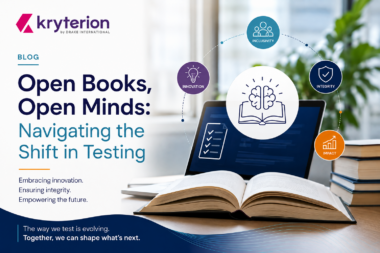
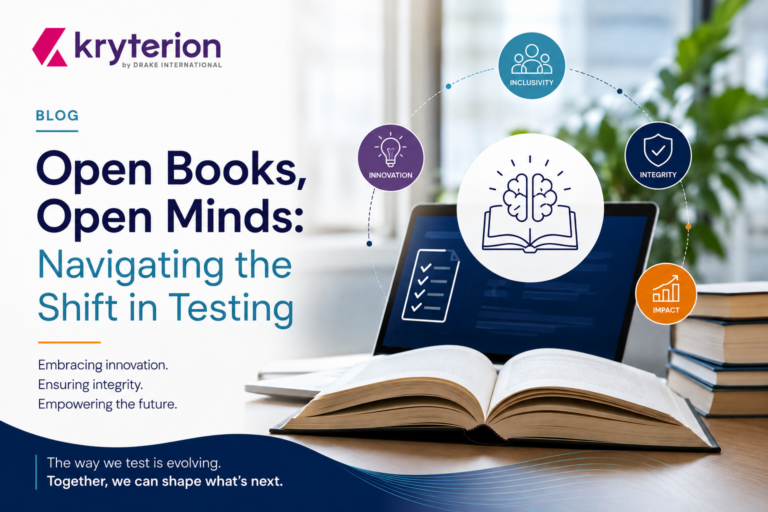
Recognizing this reality, many credentialing bodies in the IT and tech sectors are transitioning toward open-book exams. When implemented correctly, an open-book exam provides a far more authentic assessment of a candidate’s actual competency, measuring their ability to synthesize information, troubleshoot complex scenarios, and apply knowledge using the same resources they would have on the job.
However, transitioning to an open-book format is not as simple as flipping a switch. Successfully navigating and administering open-book exams requires a rigorous re-evaluation of program policies, operational workflows, and administrative requirements to make sure that exam validity and security are never compromised.
Defining Open-Book Exams
The first and most critical hurdle in administering open-book exams is establishing a definition of what it actually means. In a modern digital testing environment, an unstructured open-book policy can cause compromised intellectual property and invalid test results.
IT certification programs must clearly delineate the boundaries of acceptable resource usage. Will candidates be allowed to access physical textbooks, or only digital documentation? If digital, is the access restricted to a specific vendor’s official documentation repository (such as AWS Documentation, Microsoft Learn, or Cisco’s developer portals)?
A comprehensive policy must explicitly address modern threats. For instance, accessing a static PDF or a whitelisted documentation URL is vastly different from accessing dynamic, community-driven sites like Stack Overflow, GitHub, or Reddit, where a candidate could theoretically post a live exam question and receive real-time assistance. Furthermore, the rapid rise of Generative AI tools like ChatGPT and GitHub Copilot means that policies must strictly forbid and technologically block access to AI-assisted search and generation.
Programs must draft policies that list permitted resources but also clearly outline the penalties for attempting to access unauthorized domains. This is to make sure these policies are legally sound and defensible in the event of candidate appeals.
Operational Realities
The operational impact of moving to an open-book model heavily influences how exams are proctored and monitored. In a traditional closed-book exam, the rules are clear. The candidate’s eyes should be on the screen, and their workspace must be entirely clear. Deviations, including looking away, interacting with a secondary device, or navigating away from the exam, are an immediate red flag.
Open-book exams introduce a higher degree of operational complexity. Proctors must now distinguish between a candidate legitimately referencing a physical manual or navigating a whitelisted digital resource, and a candidate attempting to access a secondary, unauthorized device or prohibited website. This increases the cognitive load on proctors and requires significantly more sophisticated operational protocols.
Operationally, testing programs need to decide how they will manage these resources during both live online proctoring and test-center delivery. If physical books are a permitted option, proctors must learn how to inspect these materials prior to the exam. That’s to make sure that no unauthorized notes or cheat sheets are hidden within the pages. If digital resources are permissable, the operations team must ensure that the test delivery software can reliably lock down the testing environment while selectively allowing access to necessary documentation without exposing the broader internet.
Managing the Candidate Experience
From an administrative perspective, the introduction of open-book exams significantly alters candidate communication and preparation requirements. After all, ambiguity is the enemy of a smooth exam experience. If candidates do not explicitly understand what they can bring or access, it leads to pre-exam anxiety, increased support tickets, and potential conflicts with proctors on test day.
Administrators must overhaul their candidate handbooks, registration emails, and pre-test checklists. Clear instructions must be provided detailing exactly how to access digital resources during the exam, how to format physical books, and what the proctoring experience will look like.
Furthermore, administrators must prepare for the impact on exam timing. Candidates often fall into the trap of believing that an open-book exam requires less preparation, assuming they can simply look up every answer. This often leads to time management issues. Administrators must make sure that time limits are rigorously calibrated and communicated so candidates understand that the book is a reference tool, not a substitute for deep functional knowledge.
The Kryterion Approach
For IT and tech programs, embracing the open-book model is an essential step toward authentic assessment. But it cannot come at the expense of test security. At Kryterion, we understand that moving to this model requires more than just policy updates. It requires a structural evolution in the design and delivery of tests.
We partner with IT credentialing programs to implement open-book exams that accurately measure technical proficiency while deploying industry-leading safeguards to protect the integrity of the credential.
Intentional Test Design
The foundation of a secure open-book exam is intentional test design. If an answer can be found by searching a keyword in an index, it is not a valid open-book item.
Kryterion’s psychometricians and test development experts work closely with subject matter experts (SMEs) to fundamentally shift the item-writing paradigm. We help programs move away from basic recall and recognition items toward higher-order cognitive functioning: application, analysis, and synthesis.
By designing scenario-based items, complex architecture diagrams, and multi-step troubleshooting logs, we ensure that the open resources only provide value to a candidate who already possesses the foundational knowledge required to understand them. A candidate who doesn’t know how to architect a cloud solution won’t be saved by access to a technical manual. The manual simply serves as a tool to verify specific parameters or syntax for the competent practitioner. This intentional test design inherently protects exam security, as the answer is not explicitly written anywhere in the allowed materials.
A Product Vision Built for IT Competency
Kryterion’s technology roadmap is deeply aligns with the needs of the IT and tech sectors, focusing on providing maximum flexibility without compromising the locked-down environment required for high-stakes testing.
Zach Irwin, Senior Psychometrician at Kryterion, encapsulates this philosophy perfectly:
“Authentic assessment and exam security are not competing priorities. When the design of an examination reflects real-world practice, candidates may appropriately have access to selected job-relevant resources. The key is ensuring that access is controlled and aligned with the competencies being measured. With configurable delivery controls and resource whitelisting capabilities, Webassessor enables organizations to provide access to approved materials while maintaining the integrity of the testing environment. The result is an assessment experience that reflects professional practice while supporting valid and defensible score interpretations.“
Delivery Models Designed to Protect Exam Integrity
Even with excellent item design, the risk of item harvesting and candidate collusion remains. If a candidate has access to resources and the internet, the risk of exposure increases. Kryterion combats this through advanced delivery models where exam forms are dynamic and unpredictable.
For example, Kryterion’s Webassessor platform can seamlessly manage multiple exam forms. By utilizing random form assignment, a program can guarantee that candidates sitting next to each other in a test center or collaborating maliciously online are given entirely different sets of questions.
Secure Technology and Support Mechanisms
Finally, the success of an open-book exam relies on the technology facilitating it. Kryterion’s Webassessor platform provides customized, granular lockdown settings that are essential for IT certifications. Through secure browser technology, Kryterion can restrict candidates to the exam window while selectively whitelisting specific, pre-approved URLs or domains.
Furthermore, Kryterion’s proctoring solutions, whether leveraging our global network of Kryterion Testing Centers or our robust online proctoring services, are supported by strict, client-defined operational rules. We work with our IT clients to establish exact protocols for how proctors should monitor candidate behavior during open-book exams so that our operations team fully aligns with your specific security requirements.
Transitioning to an open-book exam format is a powerful way to make your IT certification more relevant, respected, and reflective of true professional competency. By combining rigorous policy management with Kryterion’s intentional test design, advanced delivery models, and secure technology, your program can confidently navigate this transition, delivering a superior candidate experience while maintaining the uncompromising security your credential demands.
About Kryterion
Kryterion Inc. is a global leader in innovative testing and credentialing solutions. We help organizations across various sectors develop and manage their assessments with our advanced test development platform and multi-modal delivery solutions. Established in 2001 Kryterion offers secure and integrated services along with extensive support. This empowers candidates to demonstrate skills and achieve success in world class careers.